

Businesses are investing in mobile applications faster than ever before. Whether you’re a startup with a groundbreaking idea or an established enterprise looking to improve customer engagement, a well-designed mobile application can transform the way you operate and serve your customers.
However, successful mobile app development is much more than writing code. It involves strategy, market research, UI/UX design, development, testing, deployment, and continuous improvements.
In this complete guide, you’ll learn everything you need to know about mobile app development in 2026, including development costs, the complete process, the latest technologies, AI integration, and how to choose the right mobile app development company for your business.
If you’re planning to build a high-performing application, this guide will help you make informed decisions and avoid costly mistakes.
What is Mobile App Development?
Mobile app development is the process of designing, building, testing, and maintaining applications for smartphones and tablets.
Modern businesses use mobile applications to:
- Improve customer experience
- Increase sales
- Automate business operations
- Build customer loyalty
- Offer digital services
- Generate recurring revenue
A professionally built mobile application combines attractive design, excellent performance, strong security, and scalability.
Whether you need a customer-facing application, an enterprise solution, or an AI-powered platform, choosing the right mobile app development services is essential for long-term success.
Why Mobile Apps Are Essential for Businesses in 2026
Consumer behavior has changed dramatically over the past few years.
Customers now expect businesses to provide instant access through mobile devices.
Companies that invest in custom mobile app development often benefit from:
- Higher customer engagement
- Increased conversions
- Better customer retention
- Faster business processes
- Improved operational efficiency
- Better data collection
- Competitive advantage
From healthcare and finance to retail and logistics, nearly every industry is embracing mobile technology.
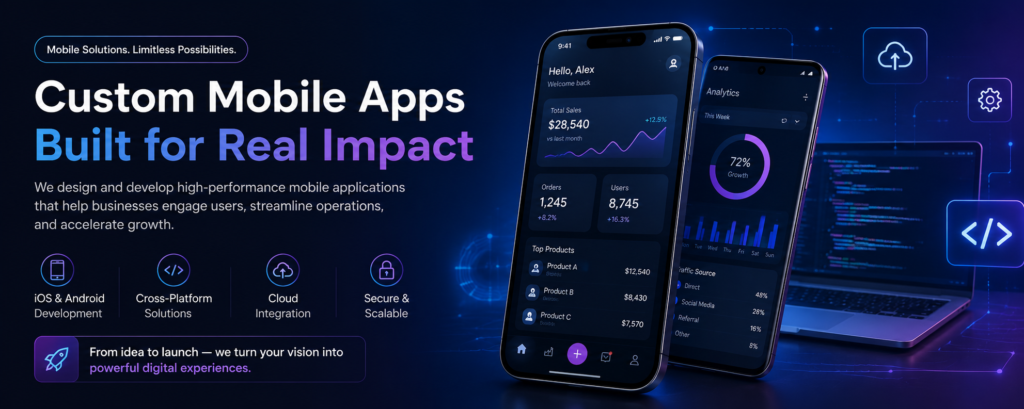
Types of Mobile Applications
Choosing the right type of application is one of the first decisions in the mobile app development process.
Native Mobile Apps
Native applications are built specifically for one platform.
- Swift for iOS
- Kotlin for Android
Advantages
- Excellent performance
- Better security
- Smooth user experience
- Full device access
Best for:
- Banking apps
- Healthcare apps
- Enterprise applications
- High-performance products
Cross-Platform Mobile Apps
Cross-platform development allows businesses to build one application that runs on both Android and iOS.
Popular frameworks include:
- Flutter
- React Native
Advantages include:
- Faster development
- Lower development cost
- Easier maintenance
- Faster product launch
Many startups choose Flutter app development or React Native app development to reduce costs while reaching more users.
Progressive Web Apps (PWAs)
PWAs combine web technologies with mobile functionality.
Benefits include:
- No app store installation
- Faster deployment
- Lower maintenance costs
- Great for simple business applications
Mobile App Development Process
A successful application follows a structured development lifecycle.
1. Discovery & Planning
Every successful project starts with understanding:
- Business goals
- Target audience
- Competitor research
- Market opportunities
- Required features
Skipping this stage often leads to expensive mistakes later.
2. Market Research
Research helps identify:
- Customer pain points
- Industry trends
- Competitor features
- Monetization opportunities
Understanding user expectations before development significantly increases the chances of success.
3. UI/UX Design
User experience plays a major role in application success.
Professional UI/UX design focuses on:
- Simple navigation
- Fast interactions
- Attractive interfaces
- Accessibility
- Brand consistency
A great design improves customer satisfaction and increases retention.
4. App Development
This is where the development team begins building the application.
Development typically includes:
- Frontend development
- Backend development
- Database architecture
- API integration
- Authentication systems
- Payment gateway integration
- Cloud infrastructure
Choosing experienced custom app development services ensures your application is secure, scalable, and easy to maintain.
5. Quality Assurance & Testing
Before launch, every application should undergo extensive testing.
Testing includes:
- Functional testing
- Performance testing
- Security testing
- Device compatibility testing
- User acceptance testing
This helps eliminate bugs and provides a smooth experience for end users.
6. App Launch
After testing, the application is published on:
- Apple App Store
- Google Play Store
Professional deployment includes:
- Store optimization
- Compliance checks
- Performance monitoring
- Analytics integration
7. Maintenance & Updates
Launching your app is only the beginning.
Continuous maintenance includes:
- Bug fixes
- Feature improvements
- Security updates
- Performance optimization
- Compatibility with new operating systems
Regular updates help keep users engaged and improve long-term success.
Common Industries Investing in Mobile Apps
Today, organizations across industries rely on mobile applications to improve efficiency and customer experience.
Popular industries include:
- Healthcare
- Fintech
- Education
- Real Estate
- Logistics
- Retail & eCommerce
- Travel
- Restaurants
- Manufacturing
- Fitness & Wellness
Each industry has unique requirements, making custom mobile app development the preferred approach over one-size-fits-all solutions.
Why Businesses Prefer Custom Mobile App Development
While ready-made solutions may appear cost-effective, they often lack flexibility and scalability.
A custom-built application offers:
- Tailored features
- Better security
- Higher scalability
- Third-party integrations
- Improved performance
- Complete ownership of the source code
- Long-term business value
For companies planning sustainable growth, custom development is usually the smarter investment.
Ready to Turn Your App Idea into Reality?
Whether you’re building a startup MVP, an enterprise platform, or an AI-powered mobile application, working with an experienced development partner can significantly reduce risks and accelerate your launch.
At 3BTech, we help businesses design, develop, and scale high-performance mobile applications tailored to their unique goals.